Tag: reformed theology

Tolle Lege: “The Prayers of Jesus” by Mark Jones

My husband and I both lost our mothers within the past couple years.  They were praying women.  And they were daughters of praying women.  Their home-going left an intercessory void in our extended families that I have been struggling to fill.  Mark Jones’s book, “The Prayers of Jesus (Crossway, 2019),” couldn’t have come at a better time.  I picked it up hoping for an exposition on the what, when, and wheres of Jesus’ prayers, a how-to-manual for bowed head and bended knee.  Jones delivered on none of that.  

What he DOES deliver is so much more valuable than a treatise on how or even why we should pray.  This book is all about the who.  Jones invites the reader to view The Prayers of Jesus as a portal into the divine and human nature of our Lord.  It is a deeply Christological confession of the One who made it possible for us TO pray.  If you want to get to know Christ, the man, the Messiah, and the eternal Mediator of a better covenant, what better place to tune your ears than into His most intimate conversations, the Son’s own words to God the Father?

I turned to page one wanting to know how to pray better.  I finished the book loving Christ more for how He made it possible for me to pray at all.  I wanted to know exactly what Jesus prayed about so that I could pray for the same things.  Instead I’m praising God that EVERYTHING Jesus prayed for has and will be eternally fulfilled through His own person and for His own glory!  I came to this book with a long list of people to pray for and left in utter gratitude that Jesus, the perfect High Priest is interceding for me, now and forever!  

This last theme runs throughout the book but Jones does an especially beautiful job in chapter 13 fleshing out the details of Christ’s intercessory work on our behalf.  He gets a little help from a few other theologians (D.A. Carson and John Owen among them), in this section worth quoting here.  Referring to the two aspects of Christ’s priesthood, sacrifice and intercession, Stephen Charnock said, “The oblation provides the intercession, and the intercession could not be without the oblation (115).”  These two aspects are joined together in Thomas Manton’s comparison with the Old Testament high priest’s yearly entrance into the Holy of Holy’s bearing the names of the 12 tribes of Israel upon himself. “So Christ is entered on behalf of us all, bearing the particular memorial of every saint graven on his heart (116).”  Jones continues, “In heaven, our Lord applies the benefits of his life and death to the church that he purchased with his blood (116).” 

In John 17:9-10 Jesus prays for all those who bring him glory. After describing what the marks of those whom Christ prays for will be, Jones makes this observation:

“Christ possesses a natural glory as very God of very God.   He also possesses a peculiar glory as the God-man, the visible image of the invisible God.  But besides those two glories, he possesses a third glory:  the glory that comes to him from his bride.  This depends not upon us (part of his creation), in the final analysis.  The glory certainly comes to him through us because he prayed for us to bring glory to him (117)… God the Father, God the Son, and God the Holy Spirit —all one God—will make sure that the church glorifies Christ (118).”

Wow!  If I am Christ’s it is only to bring Him glory.  And if I bring Him glory it is only because Christ’s sacrifice and intercession make it possible.  I am Christ’s and He is glorified in me BECAUSE He prayed and continues to pray that it will be so!

Jones concludes with these words and I will as well,

“The King of glory prayed on his way to glory, where he ever lives to pray for the saints.   We can be so thankful for the prayer life of Jesus.  There is no hope without it, but every hope because of it (203).”
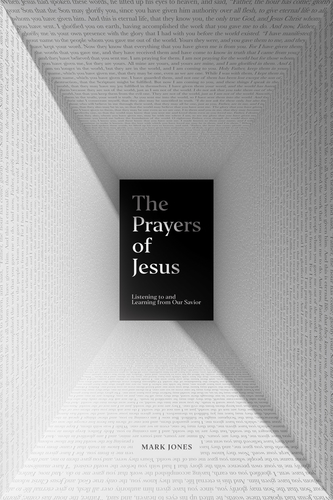
image.png

Even though I was provided with a free copy of this book from the publisher, I am not required to write a favorable review.

Devo 25

“I have seen everything that is done under the sun, and behold, all is vanity and a striving after wind.” Ecclesiastes 1:14

My homework for our ladies Bible study had me in Genesis 2 and 3 this morning.  I’ll take Genesis any day over Ecclesiastes.  I never know what to do with Ecclesiastes.  Genesis is just so PURPOSEFUL.  Every single element of creation intentionally placed to play its part in the great drama of redemption.  Types and shadows of the coming Messiah, the last Adam and the bride He purchases for Himself, the Sabbath rest that is to come, the New Heavens and Earth where we, clothed in Christ’s righteousness, will dwell securely— these just seem to jump from the page at me.

So it was a reluctant leap for me this afternoon from the loftiness of Genesis into the murky waters of Ecclesiastes.  But when I dove in, I found Eden all over again.

Solomon’s descriptions of life under the sun, read like a dirge of lament over what was lost in the garden.  The purposefulness of creation carries now an air of purposelessness, or vanity, as the Preacher calls it.  Here sits the king in Jerusalem, another imperfect ruler like Eden’s first, in the imperfect shadow of the City of God, and all he can see is how nothing on earth can ever be made right again as long as sin and death reign.  

“What does man gain by all the toil at which he toils under the sun?”  He asks.  Generations come and go.  The sun keeps on rising and setting and there is nothing new under it (Eccl. 1:3-9).  You work.  And then you die.  “All are from the dust, and to dust all return (Eccl. 2:20).  Is he not echoing the very words of God to Adam in Genesis 3:19?  

“By the sweat of your face you shall eat bread, till you return to the ground, for out of it you were taken; for you are dust and to dust you shall return.”

Welcome to the curse.

Was the curse intended to make us happy and contented with our lot?  No!  Solomon’s depression over the situation in which we all find ourselves makes perfect sense.  What wouldn’t make sense is for one to revel in the vanity of life and somehow find fulfillment therein.  He even tests this approach to see if it would work.  And in doing so only ends up repeating all of Eve’s first foibles.  

When the serpent challenges God’s authority by twisting His command thusly, “Did God actually say, ‘You shall not eat of any tree in the garden?” Eve should have rebuked his error but instead she falls prey to it and adds her own twist to God’s command not to eat the fruit from the Tree of the Knowledge of Good and Evil.  “Neither shall you touch it,” she adds. 

In the same way, Solomon twists the creation mandate by adding to it.  He doesn’t just stop with the God-given task of building houses and planting vineyards, gardens, parks, and fruit trees and making pools of water to irrigate it all.  Instead of being content to work and tend his gardens, he acquires slaves to do the work for him.  And instead of cleaving to one wife he collects concubines.  And just as Adam is led astray by his wife, Solomon’s many wives and concubines turn his heart away from the one true God as well.

Like Eve, Solomon’s choices are governed by his appetites.  Eve “saw that the tree was good for food.” He searched his heart how to cheer his body with wine (Eccl. 2:3.) Eve saw that the tree was “a delight to the eyes.”  Whatever Solomon’s eyes desired he did not keep from them (Eccl. 2:10).  Eve saw that the tree “was desired to make one wise.” Solomon, too applied himself to know wisdom, with an infamous fervor, only to discover that “in much wisdom is much vexation and he who increases knowledge increases sorrow (Eccl. 1:18).”

Tragically, Eve discovered the same thing.  “She took of its fruit and ate and gave some to her husband.” Just as the serpent foretold, Adam and Eve’s eyes were opened to both good and evil and they immediately saw their own nakedness.  Solomon reached for wisdom and his eyes too were opened to all the vanity and evil and oppression and vexation under the sun. “I applied my heart to know wisdom” but this also he perceived to be “a striving after the wind (Eccl. 1:17).”

Adam and Eve commenced their striving after the wind right away.  

“Then the eyes of both were opened, and they knew that they were naked.  And they sewed fig leaves together and made themselves loincloths (Gen. 3:7).”

Oh the vanity!  As if that would cover their disgrace!  And then vanity of vanities, as soon as they become aware of God’s presence in the garden, they hide!  

Two truly remarkable things happen next.  The first is, God calls Adam’s name. Think of the power behind that summons!  “Samuel! (1Sam.3),” “Lazarus! (John 11),” “Saul! (Acts 9).” One has to assume that had God not come calling for them, Adam and Eve would have tried hiding forever.  But when God calls, you come out, you wake up, you rise from the dead, you fall to the ground in repentance. 

Adam’s response is also noteworthy. He claims to have been hiding due to their nakedness, except that was AFTER they had sown themselves the leafy loincloths.  But amid the soul- penetrating sound of the voice of God, all our pretenses fall away, don’t they?  Our own vain attempts at self-righteousness are exposed for what they are, filthy rags.  

And so God stoops to clothe his pathetic, naked, rebellious creatures.  He slays an animal and makes them skins and in so doing Adam and Eve are given a glimpse of what their disobedience will some day result in —the brutal death of God’s own Son, who will willingly lay down His life so that we might be clothed in His own righteousness, creating a way for us cowering creatures to once again come boldly into God’s presence without shame. 

THIS, my friends, is the righteousness Jesus was encouraging us to seek after in Matthew 6:28-32.

“Consider the lilies of the field, how they grow: they neither toil nor spin, yet I tell you, even Solomon in all his glory was not arrayed like one of these.  But if God so clothes the grass of the field, which today is alive and tomorrow is thrown into the oven, will He not much more clothe you, O you of little faith?”

Solomon’s royal robes were no more impressive to God than Adam and Eve’s leafy loincloths.  We, all of us, are as helpless in covering our own nakedness as the grass of the field.  God, Himself must do the covering.  And He does it gloriously.

Just think!  Those words in Matthew were the very words of the one wise “Shepherd” referenced at the end of Ecclesiastes.  “Fear God and keep His commandments, for this is the whole duty of man,” Solomon concludes, which is exactly what Adam and Eve failed so miserably in doing.  And it’s where we all fall short as well.  That’s why we need the ‘Shepherd’s’ righteous covering.  That’s why we need His wisdom and not our own! 1 Corinthians 1: 21-24 says,

“For since, in the wisdom of God, the world did not know God through wisdom, it pleased God through the folly of what we preach to save those who believe.  For Jews demand signs and Greeks seek wisdom, but we preach Christ crucified, a stumbling block to Jews and folly to Gentiles, BUT TO THOSE WHO ARE CALLED, both Jews and Greeks, CHRIST THE POWER OF GOD AND THE WISDOM OF GOD.”

And what does Christ, the very wisdom of God, command us to do?  Take of Him and eat! 

“I am the living bread that came down from heaven.  If anyone eats of this bread, he will live forever (John 6:58).”

Is God calling your name?  Come out and be clothed in the righteousness of His Son, Jesus Christ!  Reach for Him, the Living Bread, the Beauty and the Wisdom of God!  Take of Him and eat and live forever!

Devo 24

“Heaven and earth will pass away but my words will not pass away.”  Matthew 24:35

Last week’s devo was long, so I’ll make this one short and sweet.  In a way, this week’s memory verse answers the same question we grappled with last week, namely, what’s the point of trying to understand the really hard passages of scripture?  We already talked about how the Bible is God’s revelation to all mankind concerning His Son, Jesus Christ and the means He provided for us to be reconciled unto Himself.  So every time we dig deeply into God’s Word we are only going to find more reason to worship our crucified and risen Lord!   We also talked about how God has given us His Spirit and indeed, the very mind of Christ, to help us understand those difficult truths!   

This week’s scripture readings all have to do with the eternality of God, His Word and ways,  and the finiteness of basically everything else. The heavens above are often referenced from a human perspective of permanence.  They seem to us firmly fixed, an endless picture of God’s faithful and eternal nature.  But scripture also reminds us that even the long enduring heavens are but a shadow.  They too, will wear out, perish, pass away.  Even the most seemingly ancient fixtures in our universe are but a breath in God’s economy.

Oh, but God’s Name and His fame (Psalm 72:17), His throne and His own, His steadfast love and faithfulness (Psalm 89:2,36), His salvation, righteousness (Isaiah 51:6) and His Word (Matt. 24:35) WILL NOT PASS AWAY!  

The infinite nature of God’s Word should beckon us to waste not a minute in plumbing its depths.  The most difficult passages are but a portal to a clearer revelation of our Glorious Lord!

Tolle lege, friends!