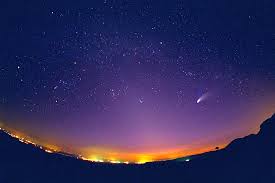
When the moon is new and dark and there are no clouds you can see about 3000 stars in the sky but with a little telescope you can see about 100,000. The brightest star we can see is Sirius. Last night we saw it from our lanai. Jupiter was brighter but it is not a star (Joel, 7 1/2).

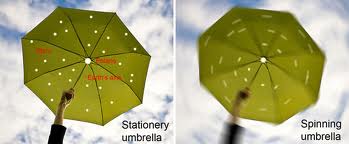
The sky is like an umbrella. The North Star is called Polaris and it is the middle of the umbrella. It never moves but all the other stars turn around it. The Big Dipper points to Polaris so you can always know where it is (Titus, 9).
Tag: homeschool science
Friday’s Factoid 20 (by Titus and Joel)
The winds on Saturn blow over 1000 miles an hour. That is faster than the speed of sound. Saturn’s winds are so strong because it is spinning so fast. It rotates faster than any other planet except Jupiter and takes only about 10 hours to make a day. But it takes 30 Earth-years for Saturn to orbit the sun (Titus, 9).
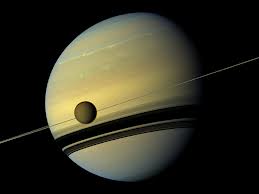
Saturn has over 30 moons. Some of the moons are in Saturn’s rings and they are called the shepherd moons because they help keep the rings in the right place. Saturn has thousands of rings and they are made of ice and rocks and dust and are not very thick (Joel, 7 1/2).
Teacher’s Two-Cents (by Mom)
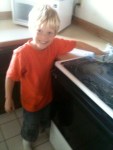
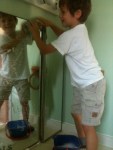
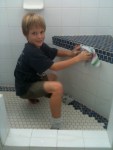
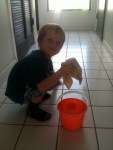
The boys had so much fun experimenting with the “soap that floats” during our study of the gaseous planets that I decided to throw another sudsy experiment their way. This time we put liquid dish soap in the blender with about 10 parts water and gave it a lengthy whirl. The result was a thick, foamy slime just perfect for smearing around. I made enough batches to fill a sand pail full for each of the boys and cut them loose with rags in the kitchen, bathrooms and tile hall ways. To make it easier, I cleared all our counters first and had the boys put socks on their feet for extra skating traction. After about 45 minutes of slippin’, slidin’ and scrubbin’ I gave them all dry towels to go over the surfaces again with. Spring cleaning and science fun in one! The boys had a blast and our kitchen and bathrooms have never been sparklier.
Friday’s Factoid 4 (by Titus and Joel)
We are learning about the sun and tried to do some real science experiments but there has been lots of clouds and also Sam drank one of our control cups of water and spilled the egg we were cooking so those experiments didn’t work. We have a new pet duck and we got to burn one of his feathers with a magnifying glass. That was fun (by Joel,7).
We also learned about thermonuclear fusion which are little explosions inside the sun
that make it burn. The sun is getting brighter and hotter. If the sun was really billions of years old then a long time ago it would not have been able to burn a feather or cook an egg or make plants grow or keep us warm (by Titus,8).
Teacher’s Two-Cents (by Mom)
So the solar science experiment kit I picked up at a garage sale was a bit of a disappointment. It was pretty chinsy to begin with but a series of cloudy days and an overly curious pre-schooler didn’t help. Just a heads up, I payed under a buck for the unopened kit but found the same thing on-line for $15-$25. Total rip-off. The same experiments can be performed with any-old thermometer, magnifying glass, and roll of tinfoil. Oh, and if you want to know more about the whole thermonuclear fusion thing and how it provides evidence for a young earth and solar system click on this article from ICR. 429
 godmadeknown