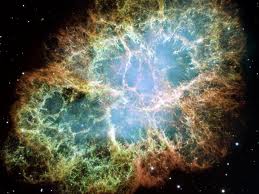
When a star explodes it is called a supernova. Supernovas leave behind nebulae. A nebula is gas and dust floating in space. It is like a foot print left by the exploded star. Almost 1000 years ago some Chinese astronomers recorded a supernova that was so bright it could be seen in the day. Then when there were telescopes they used the charts from the Chinese astronomers and found the Crab Nebula left by the exploded star (Titus, 9).
Teacher’s Two-Cents (by Mom)
I’m super excited about our topic of study for the next few weeks. Introduced in our text (Apologia’s “Exploring Creation with Astronomy,” lesson 13), and beautifully illustrated in one of our favorite books, “Adam and His Kin” by Ruth Beechick, I’ve spent the year digging deeper into the subject of the Gospel in the Stars. The 3 texts I’ve been studying are Joseph Seiss’s “The Gospel in the Stars,” E.W. Bullinger’s “The Witness of the Stars,” and thanks to a great recommendation from a blog reader, Ken Fleming’s “God’s Voice in the Stars.” All of these sources explore the constellations of the Zodiac as the ancient Hebrews would have viewed them before their meanings became corrupted by pagan astrology. Next week we will dive right into the first 4 signs and the theme of Christ as “Suffering Savior delivering man from the penalty of sin.” The next week we will see Christ as the “Glorified Blesser delivering man from the power of sin” and finally onto Christ as “Reigning Judge delivering man from the presence of sin (Fleming, 27).”

 godmadeknown