Tag: homeschool student blog

Friday’s Factoid 27 (by all of us!)

Here are the first 4 signs of the Zodiac as the ancient Hebrews saw them and their 3 deacons (smaller,corresponding signs). The illustrations are from Ken Flemming’s “God’s Voice in the Stars.”

Virgo is Mary and Coma is Mary holding the baby Jesus. Centaurus is a man-horse just like Jesus was a God-man. Bootes is the Lord our Shepherd (Sam, almost 4, with Nate’s help, and maybe a little of Mom’s, too).
IMG_6909
Libra is a scale that weighs our sins. Crux is a cross because our sins weighed too much so Jesus had to die on the cross. Lupus is an animal that had to be killed like Jesus. Corona is a crown for Jesus because he died for us (Joel, 7 1/2.)
IMG_6910
Scorpio is a giant scorpion trying to sting the hero who is stomping on his head and wrestling a giant snake called Serpens. Hercules is a hero killing a snake too (Nate, 6).
IMG_6911
Sagittarius is another man-horse and the man part is an archer. Lyra is a harp to praise the hero with. Ara is a fire for Satan to burn in and Draco is Satan getting killed (Titus, 9).
IMG_6912
Teacher’s Two-Cents (by Mom)
To help us remember the order and meaning of the 12 signs I am making up a little rhyme as we go along. Here are the first 4 stanzas:

Just like the Gospel writ of old,
The Story in the Stars is told,
Beginning with the Virgin Birth,
VIRGO shows God come to Earth.

Our sins in balance had been weighed,
And God required a Price be paid,
LIBRA shows the Scales, fair,
and the Price that God, Himself would bare.

Mortal conflict would ensue,
Our Hero’s heel would be bruised,
But He would crush SCORPIO‘s head,
And the serpent, too, is trodden, dead.

Now SAGITTARIUS doth come forth,
His double nature, being double worth,
An archer He, both man and beast,
Like our Mighty God who became The Least.
Friday’s Factoid 24 (by Titus and Joel)

Unknown
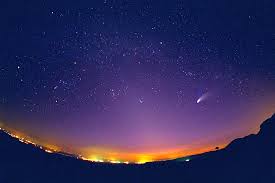
When the moon is new and dark and there are no clouds you can see about 3000 stars in the sky but with a little telescope you can see about 100,000. The brightest star we can see is Sirius. Last night we saw it from our lanai. Jupiter was brighter but it is not a star (Joel, 7 1/2).
Unknown-1
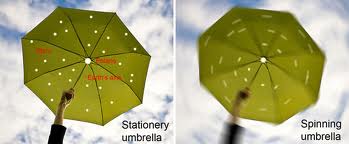
The sky is like an umbrella. The North Star is called Polaris and it is the middle of the umbrella. It never moves but all the other stars turn around it. The Big Dipper points to Polaris so you can always know where it is (Titus, 9).

Thanks AstroBob for the great illustration!

Friday’s Factoid 23 (by everyone!)

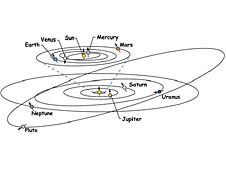
This week we studied Pluto, which is Sam’s favorite planet, so you can imagine his dismay upon hearing that in 2006 The International Astronomical Union voted to change the definition of a planet so that Pluto would no longer make the list. This caused quite a bit of discussion around here and after reading the various cases for and against Pluto’s “planethood,” the boys came to the following conclusions:

Pluto is a planet because it has 5 moons (Sam, almost 4).
hs-2012-32-a-print_br
Pluto doesn’t have a round orbit but Mercury doesn’t either, so if Mercury is a planet then Pluto is one, too (Nate, almost 6).
352767main_Pluto2-xltn
Pluto is smaller than our moon but Mercury is smaller than Ganymede [one of Jupiter’s moons] so Pluto is a planet because Mercury is a planet (Joel, 7 1/2).

NASA: "Hubble's latest look at Pluto's moons supports a common birth"
NASA: “Hubble’s latest look at Pluto’s moons supports a common birth”

Plutos’s moons act like they should if they were all created at once not if they were just rocks from the Kuiper Belt that got pulled into the orbit of another big rock (Titus, 9).

Teacher’s Two-Cents (by Mom)
Our lesson this week went a little out of orbit. While reading about the whole Pluto controversy, I was reminded of a quote by Abraham Lincoln. He asked a colleague how many legs a dog had, to which the answer was obviously 4. “But,” Lincoln continued, “Suppose you call the tail a leg, then how many legs does it have?” Lincoln’s point to the poor chap who answered “5” was that it doesn’t matter what you call a tail, it is still a tail.
When teaching science from a Creationist perspective it’s important that we not just accept the general perspective on things. Even among secular scientists those perspectives are always changing and are often at odds with each other. Pluto is a great example of this. The decision to change the planetary definition was by no means an unanimous one and they’ve discovered a whole lot about the tiny sphere since then to call that decision into question even more (like the fact that it has 4 more moons than they thought it did and those moons are all orbiting in a manner conducive to those of a singular origin which throws all their theories about Charon being a twin planet/nonplanet completely out of orbit). The point is, when I read a bunch of stuff about the Kuiper Belt being the answer to all our Solar System’s evolutionary questions and I see this simultaneous push to make Pluto just a part of that random band of space rocks I get a little skeptical.
In the eternal scheme of things Pluto’s planetary classification may not seem significant. But the Glory of the Creator is of the upmost importance and whatever seeks to steal away His credit has to be called for what it is -a lie. Controversies like this one are often at their heart not so much a matter of semantics but of secularism and the unending pursuit by scientists to shove the Creator off His throne. So, rest assured, Sam, we’re not giving up on your favorite planet so easily!