Tag: astronomy

Devo 3

“And God separated the light from the darkness.  God called the light Day, and the darkness He called Night.  And there was evening and there was morning, the first day.”  Genesis 1:4,5

In 1964 two scientists working for Bell Laboratories made an accidental discovery.  Arno Penzias and Robert Wilson were testing equipment and were surprised by static coming through the radio receiver of the Holmdel Horn Antenna.  The static was caused by radiation traveling in waves of heat and light coming from every direction of the universe.  The earth is literally bathed in this invisible glow.  

More recent discoveries have revealed that the visible matter of stars, planets and galaxies make up less than 5% of the universe.  What we cannot see is the remaining 95% which is composed of what scientists are now calling “dark energy” and “dark matter.”  We’ll learn more about that later, but for now just think about the fact that what we humans perceive as darkness, may not be just darkness after all!  Scientists still have much to discover about all those black areas in our night sky but the Psalmist declares that even darkness is as bright as day to God.  

“If I say, ‘Surely the darkness shall cover me, and the light about me be night,’ Even the darkness is not dark to you, the night is bright as the day, for darkness is as light with you.” Psalm 139:11,12

Whatever the darkness is, and however bright it may be for God, the first thing He did after creating the light was to separate the two.  This distinction between light and darkness immediately becomes a major theme in the redemption story.  Throughout the Old Testament the prophets foretold of a coming light.  It should come as no surprise then that when Jesus began His ministry in Matthew 4:16, He quotes one of those prophets saying,

“The people dwelling in darkness have seen a great light, and for those dwelling in the region and shadow of death, on them a light has dawned.”

But in John 3:19-21, we read that even though the light had come into the world the people loved the darkness more.  

“And this is the judgment:  the light has come into the world, and people loved the darkness rather than the light because their works were evil.  For everyone who does wicked things hates the light and does not come to the light, lest his works should be exposed.  But whoever does what is true comes to the light, so that it may be clearly seen that his works have been carried out in God.”

The apostles carried on this theme with Paul arguing in 2 Corinthians 6:14, “What fellowship has light with darkness?”  The answer is rhetorical and is rooted in the Genesis account of creation.  “None!”  From the beginning God separated the light from darkness and therefore, for God’s people, the distinction remains.  And just listen to 1 Peter 2:9,10.

“But you are a chosen race, a royal priesthood, a people for His own possession, that you may proclaim the excellencies of Him who called you out of darkness into His marvelous light.  Once you were not a people, but now you are God’s people, once you had not received mercy, but now you have received mercy.”

Isn’t THAT the difference between darkness and light, right there?  Because my deeds were evil, I loved the darkness, rather than the light.  But God being rich in mercy, because of the great love which which He loved me, even when I was dead in my trespasses, dwelling in darkness and the shadow of death, made me alive in Christ and caused His light to shine in my heart.  On me, a light has dawned.  Has it dawned on you friend?  Do you know the riches of God’s mercy?  Have you experienced that First Day in your own heart? I already referenced John 3:19-21, but do you know the truth of John 3:16?

“For God so loved the world, that He gave His only Son, that whoever believes in Him should not perish but have eternal life.”

To believe in Jesus Christ is to have received mercy, to be called out of darkness and into His marvelous light, to become one of His own people that you might now proclaim the excellencies of the God of The First Day.
Week 3

Memory Verse: John 3:16-19

Reading #1: Genesis 1:3-5

Questions:  Considering the obviously antithetical natures of light and darkness, why do you think Moses makes the point that “God separated the light from the darkness?”  What do you think the source of that light was?  

Reading #2: Matthew 4:12-22

Questions: When Jesus begins His ministry, who or what does He claim to be?  What condition are the people in He is talking to and what does He tell them to do?  Why?

Reading #3: 2 Corinthians 6:14-7:1 

Questions:  What examples does Paul use to illustrate the ways believers are to be separate from unbelievers?  What reasons does he give?  What is the ultimate goal of that separation?

Reading #4: 1 Peter 2:1-12

Questions: For what purpose did God call His people out of darkness into light?  What have God’s people received that distinguishes them from all other people?  

Psalms and Hymns

Great Is Thy Faithfulness  “Summer and winter, and springtime and harvest, sun, moon and stars in their courses above join with all nature in manifold witness to Thy great faithfulness, mercy and love.”

All Creatures of Our God and King “All creatures of our God and King, lift up your voice and with us sing Alleluia, Alleluia!  Thou burning sun with golden beam, Thou silver moon with softer gleam, O praise Him.”

Praying Under the Same Sky

Bahamas, Barbados, Belgium, Belize

Friday Factoid Week 2

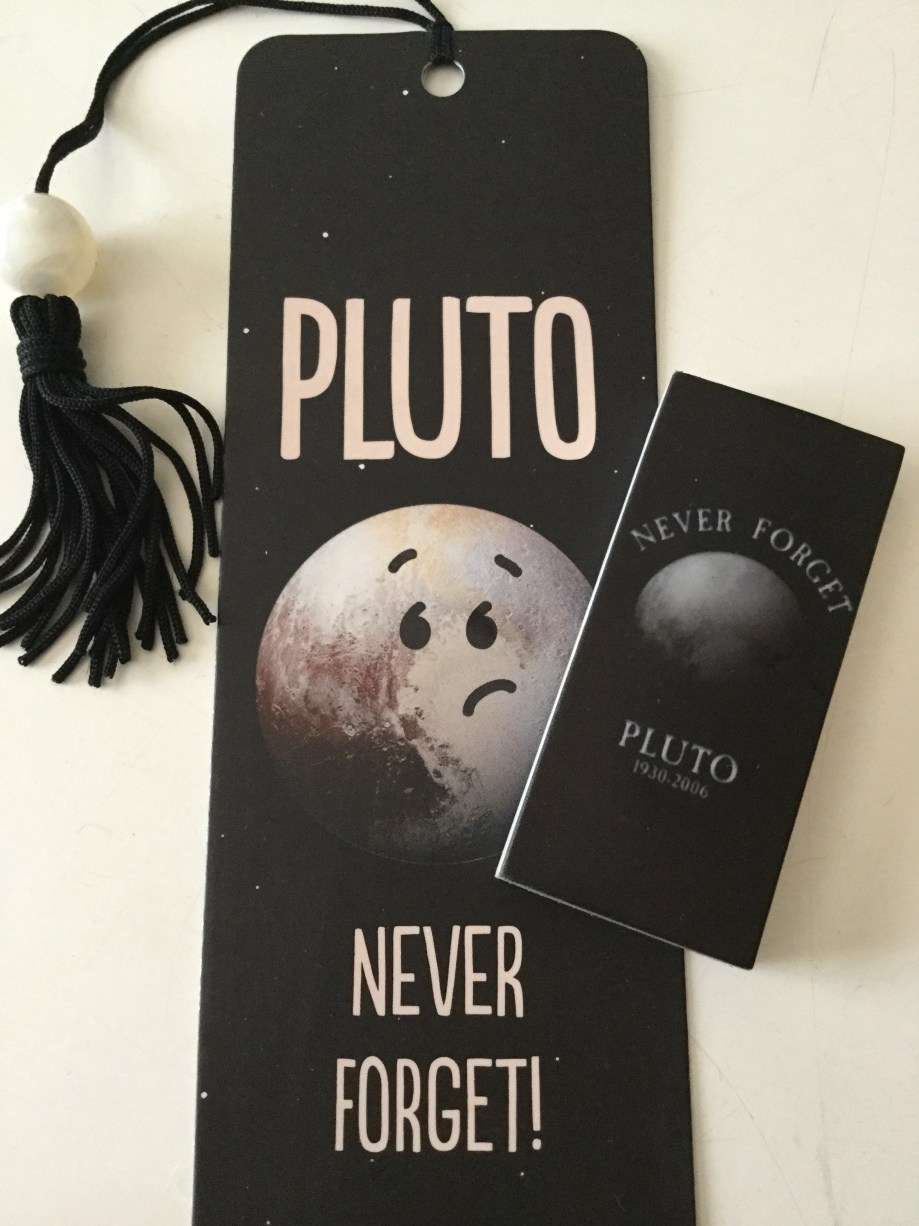
Wait!  Before we go any further. Can we just have a moment of silence for Pluto, who 12 years ago today left our solar system as a “Planet” and suffered the humiliating demotion to “dwarf planet,” thanks to some cranky members of the International Astronomical Union?  You can  leave your kind remembrances in the comments section of this post.

Factoid #1:  In  1968 NASA got sued for reading the bible from  the moon. Watch this rad  video of astronauts reading Genesis 1 (by Sam, 9).

Factoid #2: We saw Mars through our telescope. We watched a video called 7 Minutes of Terror about Curiosity ‘s risky landing in August 2012. NASA just sent a new space craft to Mars and it is exactly 1/2 way there (by Nate, 11).

Factoid #3: We got an Orion reflecting telescope and looked at the moon. We saw a bunch of craters and bumps, which led us to discover on-line that the moon has a massive lunar bulge on its surface caused by the earth’s strong gravitational pull on the moon (by Joel, 13).

Teacher’s Two-Cents:  Every couple of weeks we drive down into civilization for errands, appointments, music lessons and to visit Tom’s folks whom we love dearly and who, unlike ourselves, have internet and a TV.  The youtube videos linked above are evidence of our most recent wifi binge.  We didn’t include a link to the Netflix documentary I’m going to talk about now because I only recommend it for mature viewers.  The Furthest: Voyager in Space, stands in sharp contrast to the Apollo 8 Genesis Reading we linked above.  During the Apollo 8 mission, the astronauts came around the dark side of the moon and their first glimpse of the earth inspired them to read aloud on a live, televised broadcast the very words that are meant to come to all our minds when we view the world around us, “In the beginning, God created…”

But the Voyager mission seemed to be motivated by the opposite kind of response.  In this frenzied pursuit of human achievement, we were given a first-time close up look at 4 awe-inspiring planets.  And while people on earth reacted with wonder and surprise, the truth of Genesis 1 was noticeably absent from  the conversation.  Instead, the guiding principle of the mission seemed to be the possibility that there was other life somewhere in the universe and Voyager was our attempt to find it or be found.  The Golden Record encapsulated on the craft, and itself encapsulating music and images selected to best represent our own achievements on earth are still out there, waiting for some other beings to discover it and be amazed at us.  And while those associated with the Voyager mission seemed absolutely certain that it was possible for other forms of life to exist, they seemed equally certain of the impossibility of that other life being the God who made them and those planets they now stood in awe of.  The Golden Record of human achievement they sent out into the universe is merely a record of our own humanistic idolatry and foolish defiance.  The Voyager carries with it an offering of dross, despite its senders claims that it would in all likelihood out-live the planet it came from.

That’s my two-cents worth.

And  finally, here’s a flashback to what was going on in our Hawaiian homeschool 6 years ago this week.