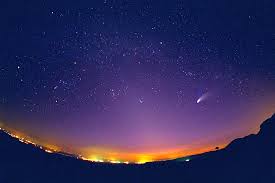
When the moon is new and dark and there are no clouds you can see about 3000 stars in the sky but with a little telescope you can see about 100,000. The brightest star we can see is Sirius. Last night we saw it from our lanai. Jupiter was brighter but it is not a star (Joel, 7 1/2).

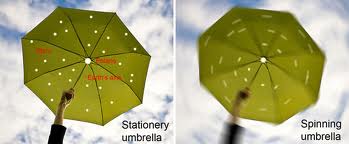
The sky is like an umbrella. The North Star is called Polaris and it is the middle of the umbrella. It never moves but all the other stars turn around it. The Big Dipper points to Polaris so you can always know where it is (Titus, 9).
U is for…
This Weeks Memory Verse: U is for…
“Until heaven and earth pass away, not an iota, not a dot, will pass from the law until all is accomplished.” Matthew 5:18

Hymn of the Week: “O Love That Will Not Let Me Go” (Matheson/Peace)
O Love that will not let me go, I rest my weary soul in Thee;
I give thee back the life I owe, That in Thine ocean depths its flow
May richer, fuller be.
O Light that followest all my way, I yield my flickering torch to Thee;
My heart restores its borrowed ray, That in Thy sunshine’s blaze its day
May brighter, fairer be.
O Joy that seekest me through pain, I cannot close my heart to Thee;
I trace the rainbow through the rain, And feel the promise is not vain
That morn shall tearless be.
O Cross that liftest up my head, I dare not ask to fly from Thee;
I lay in dust life’s glory dead, And from the ground there blossoms red
Life that shall endless be.
Friday’s Factoid 23 (by everyone!)
This week we studied Pluto, which is Sam’s favorite planet, so you can imagine his dismay upon hearing that in 2006 The International Astronomical Union voted to change the definition of a planet so that Pluto would no longer make the list. This caused quite a bit of discussion around here and after reading the various cases for and against Pluto’s “planethood,” the boys came to the following conclusions:
Pluto is a planet because it has 5 moons (Sam, almost 4).

Pluto doesn’t have a round orbit but Mercury doesn’t either, so if Mercury is a planet then Pluto is one, too (Nate, almost 6).
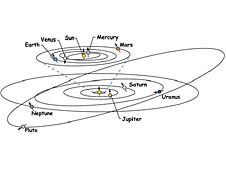
Pluto is smaller than our moon but Mercury is smaller than Ganymede [one of Jupiter’s moons] so Pluto is a planet because Mercury is a planet (Joel, 7 1/2).

Plutos’s moons act like they should if they were all created at once not if they were just rocks from the Kuiper Belt that got pulled into the orbit of another big rock (Titus, 9).
Teacher’s Two-Cents (by Mom)
Our lesson this week went a little out of orbit. While reading about the whole Pluto controversy, I was reminded of a quote by Abraham Lincoln. He asked a colleague how many legs a dog had, to which the answer was obviously 4. “But,” Lincoln continued, “Suppose you call the tail a leg, then how many legs does it have?” Lincoln’s point to the poor chap who answered “5” was that it doesn’t matter what you call a tail, it is still a tail.
When teaching science from a Creationist perspective it’s important that we not just accept the general perspective on things. Even among secular scientists those perspectives are always changing and are often at odds with each other. Pluto is a great example of this. The decision to change the planetary definition was by no means an unanimous one and they’ve discovered a whole lot about the tiny sphere since then to call that decision into question even more (like the fact that it has 4 more moons than they thought it did and those moons are all orbiting in a manner conducive to those of a singular origin which throws all their theories about Charon being a twin planet/nonplanet completely out of orbit). The point is, when I read a bunch of stuff about the Kuiper Belt being the answer to all our Solar System’s evolutionary questions and I see this simultaneous push to make Pluto just a part of that random band of space rocks I get a little skeptical.
In the eternal scheme of things Pluto’s planetary classification may not seem significant. But the Glory of the Creator is of the upmost importance and whatever seeks to steal away His credit has to be called for what it is -a lie. Controversies like this one are often at their heart not so much a matter of semantics but of secularism and the unending pursuit by scientists to shove the Creator off His throne. So, rest assured, Sam, we’re not giving up on your favorite planet so easily!
 godmadeknown